
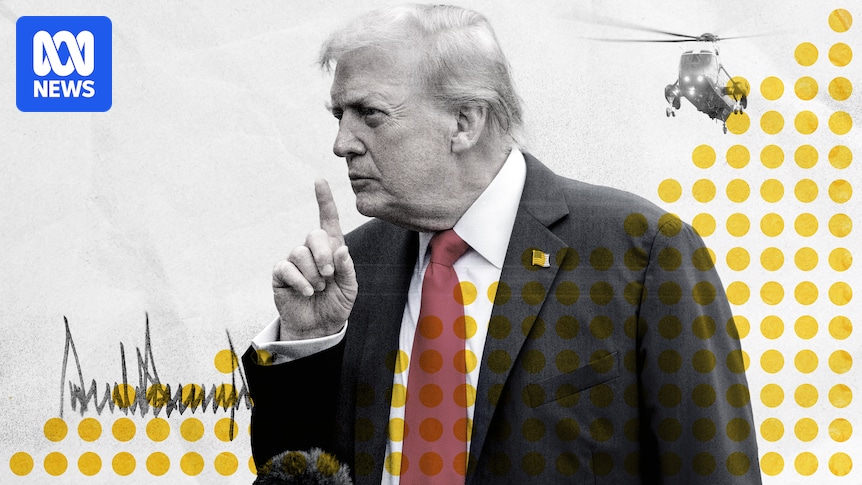
They strain to catch a glimpse of the helicopter as it touches down on the grounds of Donald Trump’s golf course in Virginia. This black-tie event offers an exclusive opportunity to dine with the President of the United States, but entry is not simply a matter of prestige; it demands a significant financial commitment. To gain access to this gathering, attendees have collectively invested approximately $150 million into the official Trump cryptocurrency, known as $TRUMP. As Trump steps off the helicopter, the crowd erupts in cheers, welcoming him into the venue. The gala is specifically designed for the top 220 investors in $TRUMP.
### Trump’s Wealth on the Rise
The financial standing of Donald Trump and his family continues to soar. Although Trump claims to have distanced himself from his business operations since assuming office, with his assets placed in a trust managed by his sons, critics argue that his actions blur the lines between business and politics in unprecedented ways. This mixing of interests raises concerns about potential violations of the U.S. Constitution and the integrity of American democracy. Trump’s extensive involvement in various business endeavors and cryptocurrency initiatives has led to accusations regarding conflicts of interest and profiting from his presidential role.
### A Gala for Cryptocurrency Investors
The Virginia gala served as an appreciation event for the top holders of the $TRUMP cryptocurrency, which debuted just three days prior to Trump’s inauguration. The Trump family benefits financially whenever the currency is traded. Within cryptocurrency circles, $TRUMP is categorized as a “meme coin,” a digital collectible inspired by internet culture, which can be traded but lacks any intrinsic real-world value or utility. One notable attendee at the event was 25-year-old Nick Pinto, who was eager to capture a TikTok video with the president. A successful investor in crypto, Pinto recognized that his investments in $TRUMP have enriched Trump and his family. He stated, “I don’t mind that Trump is profiting off this currency because I am involved in the crypto space, and his involvement drives the price up.”
### Investments and Returns
Pinto, having invested heavily in $TRUMP, ensured he secured a ticket to the gala by increasing his holdings, ultimately valuing them at around $370,000. His primary desire for attending was to film a TikTok or snap a selfie with Trump. Remarkably, within just four months of its launch, $TRUMP generated $320 million in trading fees, with a significant portion benefiting those behind the coin, including the Trump family.
### Trump’s Shift Towards Cryptocurrency
Initially skeptical of cryptocurrencies, Donald Trump’s perspective shifted during his 2024 campaign. In May, he engaged with influential figures in the crypto sector, including prominent Bitcoin advocate David Bailey. By July, he pledged to foster a pro-crypto administration if re-elected. Corey Frayer, a senior advisor on crypto markets at the time, observed that Trump’s newfound advocacy was likely driven by personal financial interests. “The entire crypto industry relies heavily on public faith in the legitimacy of crypto tokens,” he noted, suggesting that presidential involvement could inflate the market and introduce new risks.
### World Liberty Financial: A New Venture
In September, just weeks before the presidential election, Trump and his sons entered the crypto market by launching a platform named World Liberty Financial, partnering with longtime associate Steve Witkoff. This platform allowed investors to purchase tokens, with 75% of profits going directly to the Trump family. This shift marked a stark contrast to Trump’s earlier dismissal of Bitcoin as a “scam” and highlighted a significant pivot from traditional investments in real estate and hospitality.
### Ethical Concerns Surrounding Trump’s Investments
Critics express alarm over the potential conflicts of interest stemming from Trump’s dual roles in business and politics. Frayer highlighted the risks associated with a president engaged in nearly anonymous financial transactions, which could facilitate the exploitation of presidential influence for personal gain. Following Trump’s re-entry to the White House, the World Liberty Financial website indicated that he stepped back from his role, although his sons continued to be involved in the business.
### Investigations into Foreign Policy and Business Interests
The intertwining of Trump’s business activities with U.S. foreign policy has also raised eyebrows. Notably, an investigation revealed that Justin Sun, a crypto billionaire, invested $75 million into World Liberty Financial shortly before Trump’s inauguration. This investment subsequently generated substantial profits for the Trump family. Furthermore, just weeks after a $2 billion investment by the UAE’s state-owned fund MGX in Binance, Trump announced significant AI chip sales to the UAE, prompting questions about the influence of financial interests on U.S. foreign policy.
### The Financial Gains Since Taking Office
While it remains challenging to ascertain the exact financial gains made by Trump and his family since his return to the presidency, Forbes estimates his net worth has surged from $3.9 billion to $7.3 billion in just one year. The complex web of investments spanning real estate, cryptocurrency, and media complicates the evaluation of Trump’s financial success during his term.
### Trump’s Defense Against Criticism
Trump has vigorously denied any wrongdoing regarding his business dealings while in office. When questioned about his wealth accumulation since returning to the White House, he attributed most of his deals to his children running the business and dismissed the inquiries as detrimental to Australian relations. He insisted that his children manage the business and that questions about his wealth were unjustified.
### The Controversial Nature of Trump’s Business Practices
Even in the absence of explicit quid pro quo arrangements, critics argue that Trump’s business activities epitomize a broader form of corruption. Norm Eisen, a former ethics advisor, asserted that Trump’s financial interests in World Liberty Financial and the auctioning of access to his meme coin illustrate the exploitation of public office for personal gain. Eisen characterized Trump as the most corrupt president in modern history, noting the unique nature of his financial interests amidst regulatory oversight in the same sector.
### The Ethical Quagmire
Experts like Virginia Canter emphasize the ethical dilemmas presented by Trump’s financial entanglements. She questioned why the UAE’s investment fund did not directly invest in Binance, given the substantial benefits to the Trump family’s business. Canter argues that the American public deserves leadership that prioritizes public interests over personal financial gain, highlighting a significant conflict of interest.
### The Business Model of the Trump Family
The range of business ventures pursued by Trump and his family has surprised many political analysts. Republican strategist Doug Heye noted that the Trump family has capitalized on unique opportunities to generate wealth successfully. He remarked that Trump’s distinct persona allows him to operate outside the norms typically expected of a president, exploiting the system to his advantage.
### A Disenchanted Investor
Despite the financial opportunities presented at the gala, Nick Pinto left disappointed after Trump’s brief appearance. The president’s visit lasted less than 30 minutes, and Pinto felt the focus was primarily on profit rather than genuine engagement with the investors. Reflecting on the experience, he expressed dissatisfaction, feeling as though he had been misled about the nature of the event.
### Conclusion
The investigation into Trump’s financial dealings and their potential impacts on his presidency continues to raise questions about ethics and governance in the U.S. As the intersection of business and politics becomes increasingly complex, the implications for American democracy remain a topic of significant concern.


